
[ad_1]
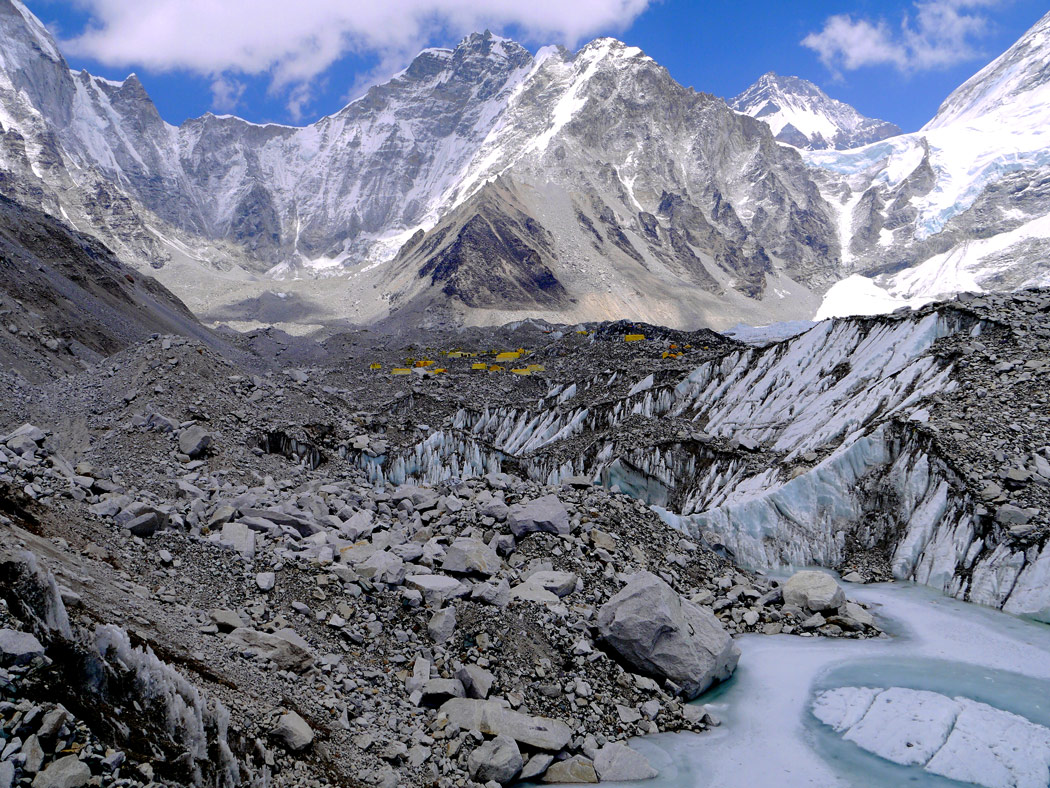
The Everest Base Camp (EBC) trek is a spectacular high altitude trek in the mountains of Nepal. Prepare for jaw dropping scenery and a unique cultural experience exploring the challenging trekking routes around the highest mountain in the world. We have completed many treks in Nepal and have just returned from Everest Base Camp for a second time to update our complete guide to Trekking to Everest Base Camp (EBC). In this guide we discuss cost, itinerary, guides, porters, altitude sickness and give packing and money saving tips
Everest Base Camp trek overview
- Distance – 120 km/75 mi
- Days required – 12 days
- Total ascent – 6015 m/19 734 ft
- Total descent – 5821 m/19 097 ft
- Highest point – 5640 m/18 500 ft Kala Patthar
- Difficulty – difficult
- Permits – Local Government fee (NPR 2000/US$17 pp.) and Sagarmatha National Park permit (NPR 3000/US$25 pp.) are required. No TIMS card needed for the trek.
- Cost per day – US$21 per person including permits and transportation. Find out more about Everest Base Camp trek cost.
- Guide – not compulsory, can be done independently, with a guide/a porter or in a group.
- Accommodation – guest houses
How to hike to Mount Everest Base Camp
You have three main options on how to do the trek to Everest Base Camp, you can either do a package tour through an agency, do it by yourself (no group or guide) but hire a porter or guide or do it completely independent.
- Doing an organized tour through an agency is a good option if you are alone or not confident to do the trek unassisted, it is an easier but more expensive option.
- Finding porters and guides in Kathmandu is easy, just go to any local agency they will assist you to organize staff for your purposes.
- Doing it yourself is not hard and plane, bus or jeep tickets from Kathmandu to Lukla is the only thing that you have to organize. You follow a very clear path, everybody stays in the same little “towns” with many tea houses, it is not necessary to book anything.
We have done the EBC trek independent more than once, trekking independent on a fairly frugal budget our cost was $645 begin and end in Kathmandu in March 2020. You can see our optimized Everest Base Camp Trek Itinerary we recommend.

Organised Everest Base Camp Trek
For some great treks with reputable international companies take a look at these great tours.
15 day Everest Base Camp trek with G-Adventures starting and ending in Kathmandu. I believe reviews is a very important resource when deciding on an activity and company, with more than 1500 reviews and higher than 90% score this looks like a winner, read some of the reviews. Including local flights, trekking, guides, porters and accommodation.
Popular international travel company Intrepid Travel Everest Base Camp trek is also a 15 day itinerary, starts and ends in Kathmandu including flights, accommodation and hiking in small groups with an English speaking guide.
If you are trekking in season escape the crowds by hiking the more quiet way and experience unreal views of famous mountains such as K 43, Taboche, Cholatse, Nuptse and Everest. Climb the tough Gokyo Ri peak for spectacular panoramic views, check out this awesome 19 day trek itinerary, hiking to EBC via Gokyo lakes with Intrepid Travel!
Everest Base Camp Trek Cost – Independent
For a complete cent by cent cost breakdown of our trek to Everest Base Camp in 2020. Cost of trekking to EBC different ways in a nutshell:
- Package tour EBC trek with international agency $1700
- Package tour EBC trek with local agency $1600
- Independent EBC trek with a guide and porter $1370
- Independent EBC trek with a guide $1085
- Independent EBC trek with a porter $930
- EBC Trek completely independent $645
If you budget around $700 for an independent 12 day EBC trek you should have sufficient money for the trek including flights, food, water, tea, snacks and accommodation. The biggest possibility to save money is to go to Lukla overland instead of flying, we discuss this later in the post.

Food on Everest Base Camp Trek
On the trek we spent 27 094 / USD $228 in total on food on an 11 day trek, if you take $25 a day it should be enough for 3 good meals per day, about $8 per meal. Food in the Tea houses were good and not too expensive considering how cheap accommodation is and that the porters and yaks have to carry all the food up the mountain. We stayed clear from meat not really trusting the quality of meat up here and it gets very expensive higher up. I treated myself to a Yak steak one night, it was terrible. The table below show the prices of some popular dishes at tea houses at different elevations, you can see as you go up the mountain prices go up.
Breakfast we often ate omelettes (2 eggs) and toast and tea with milk, I enjoyed the Masala tea. I am a big caffeine junkie, but only had one or two good coffees, for very expensive, on the trek. Want to drink good espresso while hiking to Everest Base Camp? I carry my Aeropress on most hikes, light, easy and great coffee!
We also had porridge or pancakes, price was sort of in the same range as toast and eggs.
Some common Breakfast options trekking to Everest Base Camp: Tibetan bread (bit more filling and oily than chapatti), Chapatti, Toast with jam or honey, French toast, Pancakes, Porridge with milk, Boiled or fried egg
We usually had a late lunch when arriving (15:00) and not too long after a fairly early dinner (19:00).
We were usually starving after a long day of walking so I ordered for volume and taste! We often ordered spaghetti with cheese and tomato, not bad and the portions were big. Dahl is also a good option, the porters live on the stuff, at most places it is ‘bottomless’, when your plate gets empty they will refill your dahl, rice and potatoes, if they don’t offer just ask!
Food available on most tea house menus; Thukpa (noodle soup), Momos (dumplings), Sherpa stew, a variety of Soups, Macaroni, Spaghetti, Potato, Pizza, Sandwiches, Yak steak, Rice with curry, Burger with chips, Spring Rolls.
For snacks we ate mostly snicker bars, there was cake and pastries available at some of the tea houses, not too get scurvy we bought a couple of apples on the way.

EBC Trek Interesting Dishes
You have a pretty wide selection of food on the tea house menus, here are some items you may not be familiar with.
Sherpa Stew (Syakpa) – a traditional Sherpa food, this broth (soup/stew) is made from handmade noodles, meat from sheep or yak, potato, radishes, carrot, spinach, onions and other spices.
Tibetan Bread – Flatbread, fried in oil, tasty, filling, sometimes very oily.
Momos – dumplings, go for vegetable or cheese and potato, ask for chilly sauce if there is none, the green sauce is quite good!
Springrolls- not the tiny guys you get in Vietnam, a big deep fried pie, I had similar empanadas. Sometimes the filling is awesome, sometimes strange, we eaven had spaghetti in springrolls!
Mars Roll – You have to try this one! A Mars Bar wrapped in dough and deep fried, so a Springroll with a Mars Bar inside, also available as Snicker Rolls.
Pizza – flat bread with tomato sauce and yak cheese, not too bad. I even had one with a crispy base! Go vegetarian, very suspicious fermented cold meat being passed on as salami.
Water during EBC trek
Everything becomes more expensive as the altitude increases. Water starts at 100 NPR ($1) for 1.5L and is 400 NPR ($ 4.00) when you reach Gorakshep.
We saved a ton by drinking water in our Lifestraw bottles. There are plenty of water sources along the way, but the water is not potable, with a Lifestraw we could just refill and drink on the way. This is also great for the environment since you do not use plenty of plastic bottles that is just rubbish on the mountain!

A Steri Pen UV water sterilizing device is another option so is chlorine pills, I just don’t like the ‘swimming pool water’ taste from chlorine tablets.
If you use a lifestraw bottle be carefull not to let your bottle freeze full of water at Gorakshep, this can damage the filter.
Tea houses on the EBC trek
Accommodation on route to Everest Base Camp is cheap in most tea houses. We spent NPR 5590 / $47 on 11 nights accommodation, thus NPR 500 ($4) per night for a double room. We never really bargained, but asked for good price if we eat three meals there. Namche (500) and Lobuche (700) has a fixed accommodation rate for all tea houses in town. These prices are on the condition you eat there.
Be nice – I understand budget travelers want to save every cent possible. Since they make little on accommodation the only way for the tea houses to make some money is if you eat there, therefore it is not very cool to carry your own food, sleep there and spend basically nothing.
Accommodation in teahouses are simple, the walls are thin so you hear everything through the walls and the rooms are about the same temperature as outside. The rooms usually only have two single beds, there were always enough blankets available. We carried light +11C sleeping bags, it gets very cold at night, so cold that water sometimes freezes in your bottle in the room. Sleeping in all our clothes (in down jackets), our thin sleeping bags were sufficient under blankets provided. Tip – if you are a couple move the two beds together, makes it warmer! There are no electricity sockets in the bedrooms, can usually pay for charging in dining room.
The tea house usually have a large dining hall where you eat and relax with other guests. In the centre of the dining room is a fireplace that burns wood and mostly yak dung.
At all the lodges we stayed there were now Western toilets. You have to take your own toilet paper.
There are nice lodges available in some of the villages ($20 -40) see in the itinerary later in the article.
Miscellaneous items
Shower on EBC Trek – Everything gets more expensive as you ascend. From Namche Bazaar on we had to pay for hot showers. The average cost of a hot shower was NPR 500 and after a long day walking it is definitely worth it! If you trek early in the season the water is often frozen in the pipes and you can only have a bucket shower, a bucket filled with hot water, which is fine, but in February at Gorkshep it is just too cold. We packed Wet Wipes and did a ‘dry shower’. Pack hand sanitizer for washing hands when water or soap is not available.
Charging – there are lights in the rooms, but no plugs at most tea houses and you have to pay for charging in the communal area, usually 200 NPR per item or per hour.
There are only 2 places where you will find ATM’s on the Everest Base Camp hike that is Lukla and Namche Bazaar.
Flights to Lukla, the start of the Everest Base Camp Trek
The easiest way to start the trek is to fly from Kathmandu to The Tenzing-Hillary Airport in Lukla.
Cost of Flights to Lukla– we reserved our flights with Tara Air in Kathmandu about two weeks ahead without paying. We paid $320 per person for our return flights Kathmandu – Lukla. Changing the flight dates are easy and free even while trekking. Our return date changed during our trek and we phoned Tara from a tea house on the way to change our date. I will always recommend you reserve the first flight in the morning since flights from Lukla to get cancelled due to wind very quickly, we have been stuck here for days due to weather conditions.
You are allowed only 10kg of luggage, hopefully you were not planning to carry more! If you are traveling with more luggage check that you stay somewhere in Kathmandu that will store your luggage safely without charge.
Our Flight between Kathmandu and Lukla
The sloping Tenzing Hillary airport in Lukla, considered by some as the most dangerous runway in the world.
Hiking to EBC from Kathmandu
Lukla is high in the Himalayan mountains with no roads reaching all the way here, most people fly from Kathmandu to Lukla to start the EBC trek. The flight from Kathmandu to Lukla has one of the most scary landings in the world with the Lukla runway on an incline (fun/interesting land). The flight from Kathmandu to Lukla is expensive.
The biggest possibility for saving money on the Everest Base Camp trek is by going from Kathmandu overland, skipping the flight.
Flights between Kathamandu and Lukla often get cancelled due to wind and I have heard many stories of trekkers spending a couple of days waiting in Kathmandu to fly out or in Lukla to fly back. Our flight from Lukla to Kathamandu was cancelled the first time we trekked to EBC. While waiting in Lukla for 2 or 3 days the town filled up with frustrated trekkers not being able to fly out, it was horrible. So walking out of Lukla is an ‘off the beaten track’ extension of your trek, it also takes that flight risk out of the equation.
We walked from Lukla to Salerri (2 days) and took an uncomfortable jeep journey from Salerri to Kathmandu for $20.
Coming from Kathmandu you can do the reverse and take a jeep from Kathmandu to Salleri. Salleri is 265 km away from Kathmandu. The ride is about 8 hours costing about NPR 1,100 ($10) for Buses and NPR 1700 ($17) for Jeeps, buses go daily from Kathamandu. You can walk from Salleri to Lukla in 2 or 3 days.
Another option is to take a bus to Jiri taking about 9 hours, from here the trekking route does not pass through Lukla to EBC, it goes as follows Salleri – Ringmo – Kharikhola – Puiyan – Phakding – Namche, joining the main route after 5 days at Namche Bazaar so there is an extra four days of trekking.
A good way to hike is walking the Jiri to Namche EBC route on the way up and taking the route to Salleri on the way down.
Everest Base Camp Trek Permits
In the past there were 2 permits required to do this trek, a TIMS and a National Park permit. Both permits were still checked at checkpoints along the route when we did the trek the first time. Only the local permits that are sold along the way are however now required on the trek.
Everest Base Camp permits required from 2018
Local permit cost NPR 2000 ($20) in Lukla.
Sagarmatha National Park Entry Permit (USD 30 + 13% Govt. Tax) available on the way at Monjo, you can not miss the booth on the way selling these permits.

Do you need a TIMS permit to trek to Everest Base Camp?
TIMS ( Trekkers’ Information Management Systems) is a system that was set up by the central government of Nepal to collect data of all trekkers in Nepal and according to central government the TIMS card is a requirement before any individual can trek anywhere in Nepal.
From what I understand the Nepal government wants you to get a TIMS permit so that they can add you to the database of trekkers in Nepal. This permit costs you RPM 2000 and is only valid for a single entry into any national park. This permit was required and checked in the Annapurna and Langtang region, but not in the Everest region.
There is a lot of conflicting information online so we went to the tourism board in Kathmandu to get the correct information. The tourism board assured us it is still necessary and that the information online is incorrect. While hiking to EBC they did not ask for our TIMS at any check point, when I told them I was forced in Kathmandu to buy the permit the officials laughed and told me to go and ask for my money back in Kathmandu. Several officials at checkpoints in the Everest Base Camp Trekking region assured me it is not required.
If you hike from Jiri or Salerri to Lukla you pass through areas controlled by different local government and a TIMS might be necessary.
Everest Base Camp Trek Difficulty
Our EBC trek was 120 km/75mi, so you walk more or less 15km per day for about two weeks. It is not a flat walking surface and typical of treks in Nepal there is a lot of going up and down. The distance you cover does not require super fitness, the altitude does however make it quite tough, you start at 3000m and climb 2400m further to reach base camp at 5365m. Difficulty of the Everest Base Camp Trek is influenced by; your pack weight, a porter can make it much easier here and season, if you are cold and miserable it is definitely harder.
In a nutshell; you walk 4 to 6 hours a day for 12 days, with a resting day or two for acclimatization. If you are reasonably fit you should be able to do this carrying your own backpack. Having porters make it even easier.

Best time to trek Everest Base Camp
There are two distinct seasons for trekking to EBC. The best months to trek to Everest base camp are in the pre-monsoon season through March, April and May or in the post monsoon season from late September, October, November.
Pre monsoon (Feb-May) the weather should be largely stable and dry, great for trekking. We have done a lot of trekking in Nepal between February and April. We loved the landscapes on the EBC trek in March and really preferred the spectacular snow covered mountains late February and early March to the landscapes in middle April. This time of the year was however freezing cold. If you want to hike to Gokyo Lakes just be aware that in years with a lot of snow Cho La Pass at 5420m on the way to Gokyo Ri is often closed in February and you might not be able to cross.
Post monsoon (late Sept-Nov) with less haze and clouds in this period it will normally provide better views of these spectacular mountains. This time is colder but a great time to hike to Gokyo Lakes. This is a good season for trekking, but from October it can be crazy busy with packed teahouses, combine this with frozen water pipes can make for some frustrations.
Dec-Feb Hiking still possible but very cold, up to -30C at night! Some times a lot of snow falls on the trail, passes might be closed. Avoid the crowds but bring proper equipment!
Everest Base Camp Trek Tips
Best hotel before and after EBC trek
We’ve stayed at several hotels in Kathmandu in different parts of Thamel and finally found the best (at least for us) location Keshar Mahal Marang Street. A small and quiet dead-end street in Thamel with only hotels, hostels, restaurants and coffee shops. The street is a 5-minutes walk from the main touristy area with hundreds of shops and agencies. There are a couple of great restaurants and coffee shops nearby.
There are a couple of hotels on the street we stayed at Aryatara Kathmandu Hotel for quite a while, every time we finished a trek we came back for a couple of days. It’s a very nice place, big rooms, comfortable beds, good breakfast (included), great hot shower, AC, wi-fi, TV, etc. The room price includes free airport pick-up (for international flights only). The staff is very helpful and friendly. We stored our extra luggage here every time we went hiking for free without any problem.
More options in the same street

Guides and Porters on EBC
If you are going to hire your own crew doing it in Kathmandu is the most common way, few people do this online. You do get approached by touters or guides themselves in Kathamandu, but the safest way of doing this is by going to a local agency. This way you do have someone to turn to if there was a problem, your guide cannot just dissapear.
Some agencies in Kathamandu organise that you meet your guide in Lukla while some prefer to send a guide with you from Kathamandu, in this case you will have to pay for the guide’s flight, Nepalese citizens fly at a reduced price of $100 for the return flight. You do not have to pay for food or accommodation for your guide, they get this for very cheap at the tea house or for free for bringing you.
I will recommend that you meet with the guide before, check if he speaks good enough English, if you trust him and if you get along. I have met guides that have climbed Everest, some of these guys are extremely knowledgeable.
- Make sure you are using a registered guide
- The guide should be insured
Two people can thus share a porter as long as you don’t make him carry more than 20kg.
You can budget $30 per day for a guide, which can be shared by up to four people and $20 per day for a porter.
Tipping the porter and guide on EBC
Please keep in mind that a good tip for the porter/guide is expected. These guys are unreal, we saw a porter, an old man, slip and fall he was sitting flat on his bum with his basket strapped to his forehead, me and Alya together tried to help to his feet, we couldn’t get him up, we had to wait for a third person to get him on his feet, once up he just shuffled on with his 50/60kg basket strapped to his forehead.
Insurance for the Everest Base Camp Trek
We try not to think about what can go to wrong too much when attacking a new adventure. Hiking at high altitude in a remote location, there are obviously very real risks. Insurance is very important on any high altitude trek, altitude sickness is very common and since there are no roads in these mountains if you get seriously injured or sick you will have to be evacuated by helicopter which is very expensive. Most travel insurance will not cover extreme activities like high altitude trekking. Get a quote here for World Nomads hiking insurance for Nepal that covers you to 6000m (that is a ‘yes’ for Everest Base Camp at 5364m).
Always read the small print and be sure you buy the correct policy. Be properly covered for injury, evacuation, gear loss, trip cancellation and trip delays.
Doesn’t matter where you live or where you are at the moment, it takes less than 2 minutes to get a quote and you can buy it online even if you are already traveling. If you only take out a policy for your trek duration it is not too pricey, starting in a couple of days? it is not too late
Preventing Altitude Sickness (AMS) during the hike.
Altitude sickness (AMS) is caused by ascending to quickly, climb slower to prevent it.
Altitude sickness is very common on the Everest Base Camp trek. It can happen to anybody, irrespective of how old or fit you are or if you have previous trekking experience.
During our first trek to EBC we were feeling very strong and did not stop to acclimatize at Namche Bazaar, when we got to Tengboche we had headaches during the night, staying a second night did not make AMS symptoms disappear and we turned around and walked back descending 600m. This worked and we started ascending again a day later without any further problems. We stick to the rule of thumb now, not ascending more than 600m per day.
During our last trek to Everest Base Camp we did acclimatization stops at Namche and Dingboche and never had any problems.

Hydration – Drink enough! Very important stay hydrated.
Trekking Pace -Don’t go to fast, not more than 600m increase in altitude per day.
Drugs
Many people take Diamox. At high altitude the air pressure is low and less oxygen available, Diamox prevents AMS by acting as a respiratory stimulant.
We took Diamox along in our first aid kit, but did not use it. We met several other trekkers that were taking Diamox they did not have AMS or any bad effects from taking the drug, one of the guys said he had some ‘needles and pins’ feelings in his fingertips when he started taking diamox, but it got better with time.
Contraindications Diamox, it is a diuretic so you constantly have to urinate, I believe it is a pain to go to the toilet in the cold at night. Needles and pins (paraesthesia) in hands in feet, experienced by some people.

AMS Symptoms
- Poor appetite
- Fatigue
- Headaches
- Dizziness
- Difficulty sleeping
If you have only have mild headaches you should be OK, but be careful AMS is dangerous and trekkers have died on EBC ignoring it and pushing through. You can ask the advice of the experienced sherpas that own many of the tea houses. At Periche there is a clinic with international doctors working there and a daily talk on AMS.
Remember if you keep on pushing through severe symptoms and you do not have insurance a helicopter to take you down can cost a couple of thousand dollars.

Everest Base Camp Trek Itinerary
You should never be to fixed on an itinerary, walk at a comfortable pace, if you don’t feel well rest. That is one of the problems of walking in a group, you can feel pressured to walk even when you are not feeling well which is dangerous if you have AMS symptoms. Obviously it is good to have a plan, so see your itinerary more as a plan that can change.
This is our optimum itinerary that we walked without any problems or AMS symptoms in 2020. For a detailed discussion of the route with distances, elevation profiles, prices and more see our Detailed Discussion on Everest Base Camp Itinerary.
| Day 1 Lukla – Monjo 13 km/8 mi |
Day 2 Monjo – Namche 6,5 km/4 mi |
Day 3 Acclimatization day in Namche |
| Day 4 Namche – Tengboche 11 km/6,8 mi |
Day 5 Tengboche – Dingboche 10,5 km/6,5 mi |
Day 6 Acclimatization day in Dingboche |
| Day 7 Dingboche – Lobuche 8,7 km/5,5 mi |
Day 8 Lobuche – Gorak Shep – EBC – Gorak Shep 12 km/7,4 mi |
Day 9 Gorak Shep – Kala Patthar – Pangboche 22 km/13,6 mi |
| Day 10 Pangboche – Namche 15,5 km/9,6 mi |
Day 11 Namche – Lukla 20 km/12,4 mi |
Day 12 Flight Lukla – Kathmandu |

Lukla to Salleri to Kathmandu trek
The walk back from Lukla to Salleri was a beautiful trek. It was not as commercial or touristy as the normal EBC trek. Since it was an extra 2 days of walking in terrible weather, wind, rain and hail and we only walked on advice we got from tea house owners in Lukla, it was difficult to enjoy. We walked from Lukla to Salleri in two days, from here we took a jeep to Kathmandu. Starting your trek to EBC in Salleri instead of Lukla is great for acclimatization and will save you a couple of hundred dollars on the trek.
Hiking to EBC via Gokyo Lakes
An amazing side trip to consider for your Everest Base Camp trek is going to Gokyo Lakes. These six spectacular glacial lakes, located between 4,700m and 5,000m, are situated in the beautiful Sagarmatha National Park along with Mount Everest. Add three or four days to your itinerary, challenge yourself by hiking this ‘off the beaten track’ route. If you are trekking in season escape the crowds by hiking the more quiet way. Climb the tough Gokyo Ri peak for spectacular panoramic views of famous mountains such as K 43, Taboche, Cholatse, Nuptse and Everest and the famous glacial lakes, cross the beautiful and challenging Cho La Pass. Go to EBC and Gokyo lakes with Intrepid Travel!
How to hike to Everest Base Camp via Gokyo Lakes
You have three options for a route if you want to hike to the Gokyo Lakes and EBC;
- hike to Gokyo lakes first and then on to Gorakshep and EBC
- hike to Gorakshep first and go to the Gokyo Lakes on the way back
- hike up and down to Gokyo Ri followed by trekking to Everest Base Camp in which case you will not trek over Cho La Pass.
Trek to Gokyo first followed by EBC – Hike to Namche Bazar, instead of going to Tengboche head west via Dhole and Machherma towards Gokyo Lakes. The route is circular joining the main trek up to Gorak Shep, you will thus not do the same route up and down.
Trek to EBC first followed by Gokyo lakes – When returning from Gorakshep (EBC) go to Dzongla (west) after passing though Lobuche instead of walking to Namche Bazaar through Periche. Go over the Cho La Pass, finish the circular route to Namche Bazar by trekking via Machherma and Dole.
Trek up and down to Gokyo Ri followed by trekking to Everest Base Camp – Hike to Namche Bazar, instead of going to Tengboche head west via Dhole and Machherma to Gokyo Ri, walk back the same way, from Phortse Tanga go east to Dingboche and continue with the standard Everest Base Camp Trek.

Climb Island Peak and Trek to Everest Base Camp
Do you want to add a couple of days to your EBC trek itinerary, do some real mountaineering and climb a peak in the Himalayas above 6000m? then Island Peak is just the climb for you!
Island Peak (6,189m/20,305ft), known in Nepal as Imja Tse, is the peak most often climbed in Nepal. It is a real climb, serious mountaineering, meaning it is not trekking, equipment and some technical skills are required to climb this peak. The peak is considered the perfect choice for a novice climber since it is not very technical, but it does require some mountaineering skills since moderate climbing on ice and snow is involved. Island Peak is usually climbed as part of an Everest Base Camp trek expedition as a three day extension. Before your summit attempt the climbing crew will teach you the mountaineering skills required to climb Island Peak. You should receive ladder training and practice abseiling and Jumaring. You should be physically fit and master these skills during training before the final ascend. Do not take this peak lightly it is a serous climb and mastering a 6000m peak in the Himalyas is a great achievement, pick a company with a good reputation for this excursion, read reviews and make sure you are physically in good shape. Climbing Island peak is not a cheap trip, expect to pay between $3000 and $5000 for a 19 to 23 day trip including trekking to Everest Base Camp, training and attempting to climb Island Peak.
Everest Base Camp vs Annapurna Circuit Trek
The Everest Base Camp and Annapurna Circuit treks are the two most popular long distance high altitude trekking routes in Nepal. The treks compared below are the full length standard version of both routes.
| Everest Base Camp | Annapurna Circuit | |
| Distance | 120 km/75mi | 260 km/161mi |
| Days | 12 | 15 – 18 |
| Cost Per Day | $29 or $58 including flights | $22 |
| Permits | Local Government $17 National Park $25 |
Annapurna Sanctuary $26 TIMS $17 |
| Guide | Not Compulsory | Not Compulsory |
| Start | Lukla | Bulbhule |
| End | Lukla | Nayapul |
| Highest Point | 5640m | 5400m |
Most people reach Lukla by plane and Bulbule by bus this makes trekking to EBC significantly more expensive, but Lukla can also be reached by bus.
Facilities – We did both treks in 2019/2020, facilities are now pretty similar with western toilets and internet at most tea houses on both treks. Food, snacks and wifi was definitely significantly more expensive on EBC than Annapurna.
Altitude – The Annapurna circuit with a gradual climb to a high pass is better for acclimatization than the Everest Base Camp trek which starts at a high altitude airport. Lukla is located at an altitude of 2860m and you reach 3500m at Namche Bazar on day 2 where altitude becomes a factor. On the Annapurna circuit trek you only reach 3500m at Manang after one week of gradual climbing.
Scenery -The scenery on both treks are spectacular, starting at a lower altitude and passing through more climate zones the scenery on the Annapurna circuit is more varied than on the trail to EBC. We said ‘this is definitely the best trek’ more than once on both treks!
The Road on Annapurna – Annapurna circuit became one of the most controversial hiking routes in Nepal after some parts of the trail were turned into a road. There used to be many hikers walking from Besi Sahar all the way to Nayapul nowadays the majority of people take a bus or a jeep in the beginning and at the end of the route to make it shorter and to skip walking on the road. We walked from Besi Sahar to Nayapul it took us 15 days to finish the circuit, we tried to skip walking on the road everywhere we could, out of 260 km we walked on the road only 68 km and only 24 km were on a “busy” road. I think the road definitely had a negative impact on the trekking experience here, the closer you get to Manang the more trekkers you have doing a short version of the trek over the pass. About a quarter of the route is on the road and 10% on a road with traffic, I am sure the trek lost some of its charm but still enjoyed the Annapurna circuit and will recommend it.
-

Everest Base Camp -
Campbell & Alya at the top of Thorong La pass, the highest point of Annapurna circuit trek


Packing Tips
- Water is very expensive, you have three options to sterilize tap water and drink
- chlorine pills (works but your water taste like swimming pool water)
- Steri Pen UV sterilize device. Used by couple of other trekkers on route.
- Life Straw filter, very efficient, cheap, can also buy life straw in a bottle
Check out this test of lifestraw, you can find many funny ones on Youtube, the point is this is a cheap, safe way to get good quality water out of taps and streams on the hike.
Good shoes just makes the trek so much more enjoyable, hiking thousands of kilometers in a huge variety of conditions around the world we have used a lot of different shoes and both of us are super happy with our Salomon X Ultra boots. Very light and comfortable for boots and 100% waterproof Gortex, we have walked in ankle deep snow for hours and our feet stayed dry! Ladies Salomon X Ultra Boots
- Pack a BUFF Multifunctional Headwear – protects your neck and face from sun burn, wind and weather.
-
You have to pay to charge electronics at the tea houses. Charge your phone, kindle, Go Pro any USB device with a portable charger. Luxtude 13400mAh Waterproof Portable Charger
- Travel wet wipes are very handy if it is to cold (or expensive) to shower, we have been sitting in our tent ‘washing’ with these on countless hikes, a must on your EBC packing list.
- Hand cleaner easier than finding a tap and soap to wash your hands if you want to eat.
- I am so glad I had a kindle! Awesome to read in bed on acclimatizing days. Was reading 2 different books, weighed almost nothing.
- Microfibre towels take almost no space, are light and dry easy so that they won’t get moldy and start smelling. Share one towel if you are a couple. Active Roots Microfiber Travel Towel
- We have been using our Petzl’s for ages, the electricity in the tea houses is not always on at night, a headlamp is handy Petzl Actic 300 Lumen waterproof headlamp
- It gets very cold inside the tea houses at night. Stay warm in sub zero temperatures. Down is awesome, you won’t regret it! Kelty Cosmic 20 Degree DriDown Sleeping Bag


Clothes and Gear for sale in Kathmandu
There are many shops selling the necessary clothes and gear to trek to Everest Base Camp in Kathmandu. Mostly fakes of well-known brands like The North Face. Many people buy the fake gear, obviously the quality is inferior and real brand names are not cheap here. You can rent gear in Kathmandu, usually fakes. You are not climbing Everest if you hike in summer you probably wont die of cold in a fake jacket. Having something that fits, lasts and keeps the wind and rain out is just nicer and will improve your chances of finishing the trek successfully.
Everest Base Camp Blog
Disclosure: Stingy Nomads take part in the Amazon Services LLC Associates Program. We earn advertising fees by advertising and linking to Amazon.com. If you click on the link and purchase the item, we will receive an affiliate commission at no extra cost for you. Thank You!
Related posts

PIN IT FOR LATER!
[ad_2]
Source link


